
★★★★★ 5.0 · 116+ verified reviewsBS5837:2012 planning specialists020 4531 6444 · admin@arbor-cultural.co.uk
tree protection plan - site logo
planning support★★★★★ 116+ verified reviews
Site protection

Tree Protection Plan for Planning

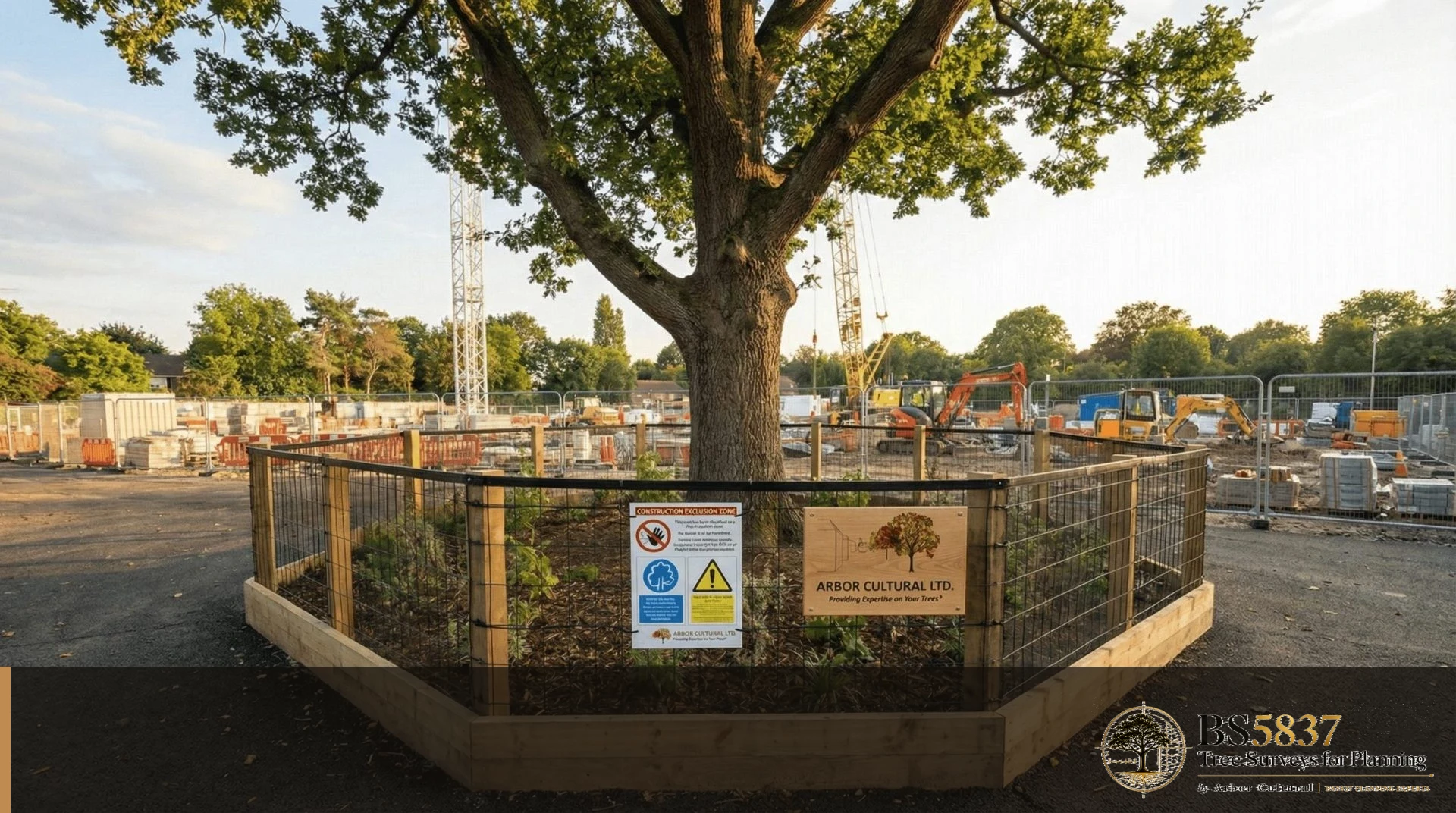
A clear construction drawing showing protective fencing, ground protection and controlled working areas around retained trees.

tree protection plan - Tree Protection Plan planning service
What this document is for

Tree Protection Plan for planning projects

A Tree Protection Plan translates the arboricultural strategy onto a drawing the site team can use. It should show where protection goes and how that relates to the approved construction layout.

The plan can identify fencing, ground protection, exclusion zones and any special working areas. The details need to be consistent with the AMS and planning conditions.

Send the approved site plan and current tree information. We can prepare or update the TPP so the construction team is working from the correct revision.

What you receive

The tree protection plan output is matched to the project, but the core deliverables normally include the items below. If the council has supplied its own wording, that request is reviewed first so the proposal is built around the live requirement.

  • Protective fencing locations
  • Ground protection areas
  • Tree references and RPAs
  • Controlled working zones
  • Construction access relationships
  • Drawing suitable for site use
Technical detail

What makes the work useful to planning and design teams.

A good tree protection plan is not produced for length alone. The aim is not to produce a long report for its own sake. The information should answer the project question clearly and remain consistent with the drawings being used.

01

Use a site-ready drawing

The TPP should be understandable to the people setting out the protection.

02

Coordinate with the AMS

The drawing and method statement should tell the same story.

03

Protect before risk begins

Fencing and ground protection normally need to be installed before damaging site activity starts.

04

Keep it current

If the site layout changes, check the TPP before relying on an old drawing.

Before the document is issued

Quality control that keeps the information usable.

A TPP should be readable at site scale, with fencing, ground protection and controlled work areas shown clearly enough to set out.

The protection drawing should support the AMS and reflect the practical site arrangement, including access and working zones where relevant.

Finally, the document should make the next decision obvious. If another BS5837 stage is needed, it should be clear why and when. If the current document completes the immediate requirement, the client should not be pushed into commissioning extra work simply because it exists on a service list.

Where it fits in the BS5837 sequence

Survey first. Then use the next document only when the project is ready for it.

Most development projects near trees follow a recognisable sequence: establish the tree resource, map the constraints, assess the actual proposal, then set out the protection and construction methods needed to deliver it. Not every small project needs every document, and not every document should be commissioned at the same time.

If you are still designing, early survey and constraints information may be the most valuable spend. If you already have a stable layout, the impact assessment becomes more relevant. If planning permission is in place, the focus often moves to AMS, TPP and supervision. The quote should reflect the stage you are actually at.

  1. 01SurveyRecord the trees and establish the evidence base.
  2. 02ConstraintsMap crowns and RPAs for design.
  3. 03AssessmentTest the live proposal against the tree resource.
  4. 04Construction detailSet out protection, methods and supervision.
Common project situations

When clients normally ask for Tree Protection Plan.

If your situation is not listed, send the actual request. The tree protection plan should be matched to the site and planning stage. The site and planning stage are more important than matching a generic example.

01

Planning condition asks for a TPP

02

Site setup is close to retained trees

03

Temporary access crosses sensitive ground

04

Contractor needs a clear protection drawing before start

How this helps the people on the project

Technical detail is only useful when somebody can act on it.

The same document is read differently by the applicant, architect, planning officer and contractor. Good arboricultural work makes the decision or next action clear to each of them.

Applicant

You should know what has been asked for, what the fixed-fee scope includes and whether another BS5837 stage is likely to follow. The service should remove uncertainty rather than replace it with more terminology.

Architect

The drawing references and tree information need to be coordinated so the design can respond to real constraints and later revisions can be checked without rebuilding the evidence base from scratch.

Planning team

The Local Planning Authority needs a clear line from tree quality and constraints to the proposed development, mitigation and construction controls. Consistency across the documents matters as much as volume.

Contractor

Where the project reaches site, protection and method information needs to translate into fencing, access, excavation, storage and supervision instructions that can actually be followed.

Information that speeds up the quote

Show us the project as it exists today.

For a tree protection plan, send the site address, current architectural drawing, topographical survey if available, and the exact wording from the council, tree officer, Building Control or project consultant. Include any earlier tree survey or report too. Existing information may still be useful and should be checked before repeat work is recommended.

If there is a submission date, condition-discharge deadline or construction start date, include that at the beginning. Programme can affect what needs to happen first.

Questions

Tree Protection Plan FAQs

These are general planning answers. Your council condition or validation request may be more specific.

What does a TPP show?

Typically fencing, ground protection, RPAs and controlled work areas.

When is it installed?

Normally before relevant demolition or construction activity begins.

Can it be updated?

Yes, where a revised site arrangement requires a different protection strategy.

Does it need an AMS?

Often, especially where there are operations inside or close to protected areas.

Who uses it?

The contractor, project team and Local Planning Authority can all rely on the plan.

Tree Protection Plan · Planning Support

Send the plans. We will confirm the right scope.

Get a clear fixed-fee proposal for the tree protection plan before you instruct.